sábado, 24 de noviembre de 2007

Molas


back to the Kuna Yala homepage

Molas were developed when the Kuna woman were able to acquire store-bought yard goods in the mid 18000s when they met European traders. This offered them the opportunity
to express themselves through complex desighs. They are carefully hand stitched; however, some of the women are now using sewing machines. They sew these on these on their dresses as part of their custom wear. They also stitch molas onto pillows, t-shirts, billfolds, purses, ties, and many other things to sell to tourists on the islands and in Panamà. The Kuna live on about twenty dollars a month, so the women sell these molas for extra money.

jueves, 22 de noviembre de 2007

Chi Chi Parties

back to the Kuna Yala homepage

The kuna tribes celebrate special occasions by having Chi chi Parties that usually last about three days. The women of the community prepare for the celebration by brewing beer from bananas. They strongly encourage everyone in the community to participate; if one chooses not to, then they are heavily fined.


Culture

back to the Kuna Yala homepage


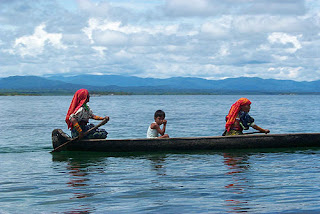
These Indians Have a strong knit tribal society. They remain close to their families, and when a woman gets married the man moves in with her familiy.
The grandmother is the head of the household thus displaying a matriarchal society. Daughters are valued in the Kuna family because they will eventually bring added manpower to the familiy. Through out the centuries, the Kuna have hept their indigenous way of life, although some outside influence has slowly filtered its way through.

The " Golden Children" and Religion

back to the Kuna Yala homepage

Many of the elder Kuna believed that they were God's chosen people and because of that they would automatically go to heaven. The late Kuna worshiped a sun god. They would roll themselves in gold dust, and when they stood in the sun, their bodies glowed. This was where the name "Golden Children" was derived. Most of the younger generations, however, do not hold this belief.


The Kuna believe in a God that created the world, but is now far away. They think that groups of evil spirits roam the earth and are able to enter people bodies causing sickness and diseases. Witch doctors are prevalent throughout the communities. When a person is sick, the witch doctor chants and gives the patient homemade medicine. If the person dies, then the community may have a smoke out. They build a large fire to smoke the evil spirits away from the island. When this practice is being performed, no Americans or anyone other than Kuna are allowed on the island. They believe outsiders may carry more evil spirits in.

The Kuna chief is regarded much like an Old Testamaent prophet that speaks for God. He tells people what they must do in order to please the LORD, so he will not send horrible things against them. Many Kuna still have not heard the clear message of Jesus Christ.

martes, 20 de noviembre de 2007

History


back to the Kuna Yala homepage

In the early 1500s the Spanish tried to civilize the Kuna by trying to change their way of life They also used them as slaves for hard labor. Thousands were killed for their gold nose rings, and many died from European diseases However, the Kunas made allies with the British againist the Spanish to win their independence from Spain. As a result, there continues to be hostility toward the Spanish and amicable relations with Panamà. Then, with the help of America in 1925 they became a reserve within the Republic of Panamà. Their population continues to increase ( there is now an estimated 60,000 Kunas), and although they remain somewhat outside the Panamanian society, they are influenced by Western culture. This is largely due to the Columbian trade boats and tourist that visit the islands.
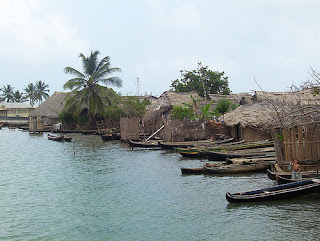
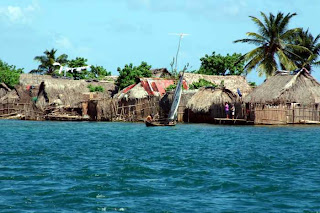
San Blas Islands

Hundres of years ago, the Kuna lived on the mainland of Panamà until a fierce earthquake killed many of them. Out of safety, the tribes moved to the islands of San Blas. The islands are located off the Atlantic coast of Panamá. There are three hundred and eighty islands in all, but only fifty-two are inhabited. Most of the islands are less than a mile in length and formed by coral reef. If more are needed, then they build up more land with rock. Very few tribes still live on the mainland.

Weather

The San Blas Islands are hot and humid with the average temperature in the eighties and nineties. January through May is considered the dry season and May to September are the months with the heaviest rainfall.

Language

The Kuna have their own language called Tule. This dialect is spoken in phrases rather than full sentences like English in grade school, so by the time they leave elementary they are fluent in Spanish. Very few Kunas are able to speak English. Most that do know the language are men that used to work on the Panamà Canal; they learned English from the Americans. When the Panamanians took over the canal in 2000, many Kuna lost their jobs and moved back to the Islands.


Robby leyendo la Biblia.
Hermano de Eliseo